
U.K. ambassador lauds anticipatory aid for at-risk Mayon communities
Published: Mar 13, 2026 Reading time: 4 minutes Share: Share an articleDisplaced residents in Camalig met with British ambassador Sarah Hulton on March 12 as part of a monitoring visit of ongoing humanitarian anticipatory action projects in response to Mayon Volcano’s unrest.
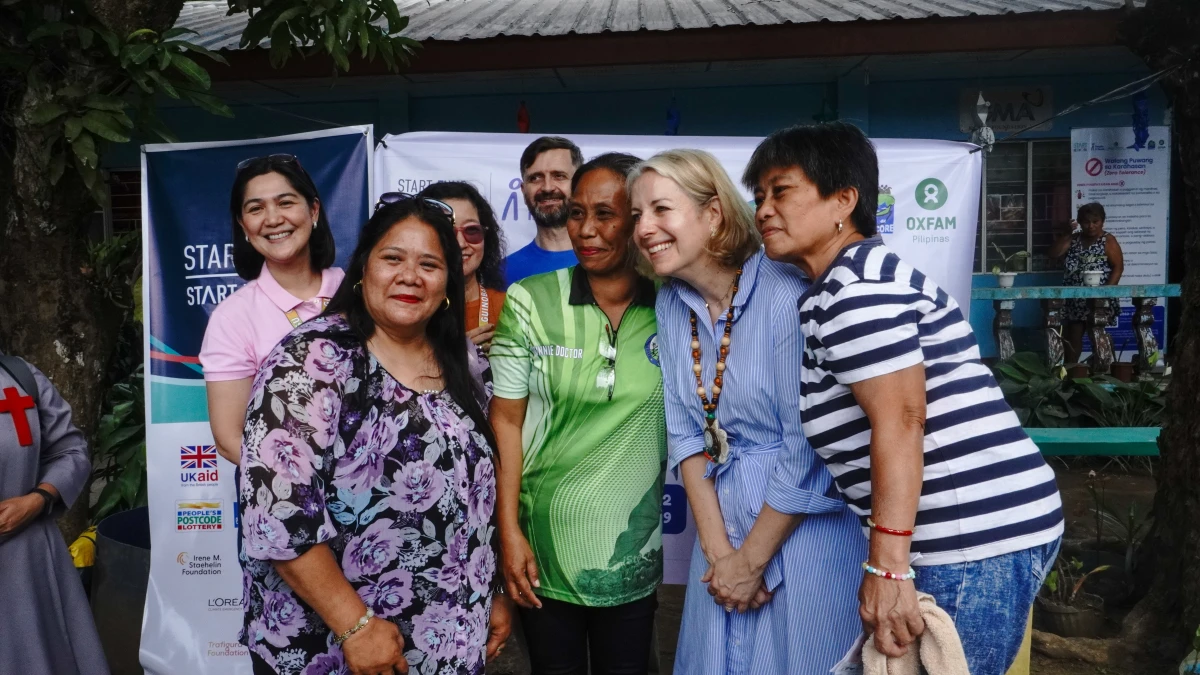
Hulton visited Bariw Elementary School to monitor the progress of the Mayon Anticipatory Action Project, which aims to help communities prepare for any potential hazards and address the needs of families experiencing displacement, disrupted livelihoods, interrupted education and psychological trauma due to the prolonged effusive eruption of Mayon.
“I was deeply moved by the resilience of the families who have been displaced due to the eruption of Mayon,” said Hulton.
More than 1,700 families (around 8,500 individuals) have been displaced due to the ongoing unrest of Mayon Volcano. Of these, more than 1,100 families from high-risk areas in Camalig, Guinobatan, Malilipot, and Santo Domingo are currently sheltering in 13 evacuation centres since January 6, according to the Department of Social Welfare and Development.

In several sites, 12 to 15 families share a single classroom, creating challenges for privacy, sanitation, and health services.
To support these communities, the Mayon Anticipatory Action Project has provided early timely assistance across multiple sectors, including food and livelihood support, water, sanitation, and hygiene, health and protection services, and educational materials to ensure learning continuity for children.
For the displaced residents, anticipatory assistance has helped make their prolonged stay in the evacuation center more manageable.
“We are thankful that we now have access to free, clean drinking water near our room. If something happens to the volcano, at least we are better prepared,” said Sherly Marilla, a displaced resident of Barangay Quirangay in Camalig.

During the visit, the delegation observed facilities supporting displaced families, including water access points and classrooms serving as temporary shelters. They met with community health workers, volunteers, and first responders participating in psychological first aid training, which equips local responders to provide mental health and psychosocial support to families affected by the disaster.
“We also have solar lights to keep us safe at night and mattresses and blankets to sleep comfortably. For the vegetable seeds we grew in our garden, we were able to eat as food and also sell in the market,” Marilla added.
School representatives highlighted anticipatory education measures, including school contingency planning and learning continuity initiatives, which help ensure that children in both evacuation centres and high-risk areas can continue learning.

The Mayon Anticipatory Action Project (MAP) is a 60-day initiative designed to act before volcanic hazards escalate into a major humanitarian crisis.
The project is implemented by People in Need, Oxfam Pilipinas and three Bicol-based organizations: Simon of Cyrene Community Rehabilitation and Development Foundation, Mayon Integrated Development Alternatives and Services and Coastal CORE.
Through the Start Network’s Start Fund, the government of the United Kingdom and other donors support the project through a £200,000 (PHP 15.9 million) allocation.
“The U.K. is proud to support Start Network’s Bicol Consortium who are delivering anticipatory interventions to help the affected community,” said Hulton.
“We are grateful for the support of the U.K. Government and partners, which enables us to deliver anticipatory action support to communities most at risk from the hazards surrounding Mayon Volcano,” said Pascal Arthaud, country director of People in Need Philippines.
“This innovative multi-hazard approach helps communities prepare and respond before risks escalate into a humanitarian crisis, while also strengthening the capacity of local responders, so they can support their communities. We believe empowering local actors builds more sustainable interventions,” Arthaud added.

Proactive disaster response
Anticipatory action is a form of humanitarian intervention enacted before a disaster strikes. Unlike typical emergency responses where assistance is only given after a disaster, anticipatory action is proactive and aims to protect and save lives and livelihoods and to improve the capacity of affected populations to recover from a crisis.
Republic Act 12287, signed into law last year, institutionalizes anticipatory action in disaster management by allowing authorities to release funds and deploy resources before a disaster strikes, based on scientific forecasts.
Anticipatory action is better suited for slow-onset hazards such as effusive eruptions and droughts, where the impact is spread out over long periods rather than a single destructive event.
“Evidence and experience has shown us that anticipatory action saves lives, protects people’s dignity, and is more cost-effective,” said Lot Felizco, executive director of Oxfam Pilipinas.
“By acting early and decisively, we can prevent forecasted hazards from turning into full-blown crises,” Felizco added.


