
Flood early warning system expands across the Philippines to protect high-risk communities
Published: Apr 18, 2026 Reading time: 4 minutes Share: Share an articleManila, Philippines — As flooding risks intensify across the country, efforts to deliver faster, more localized, and accessible early warning systems are scaling up to reach vulnerable communities.
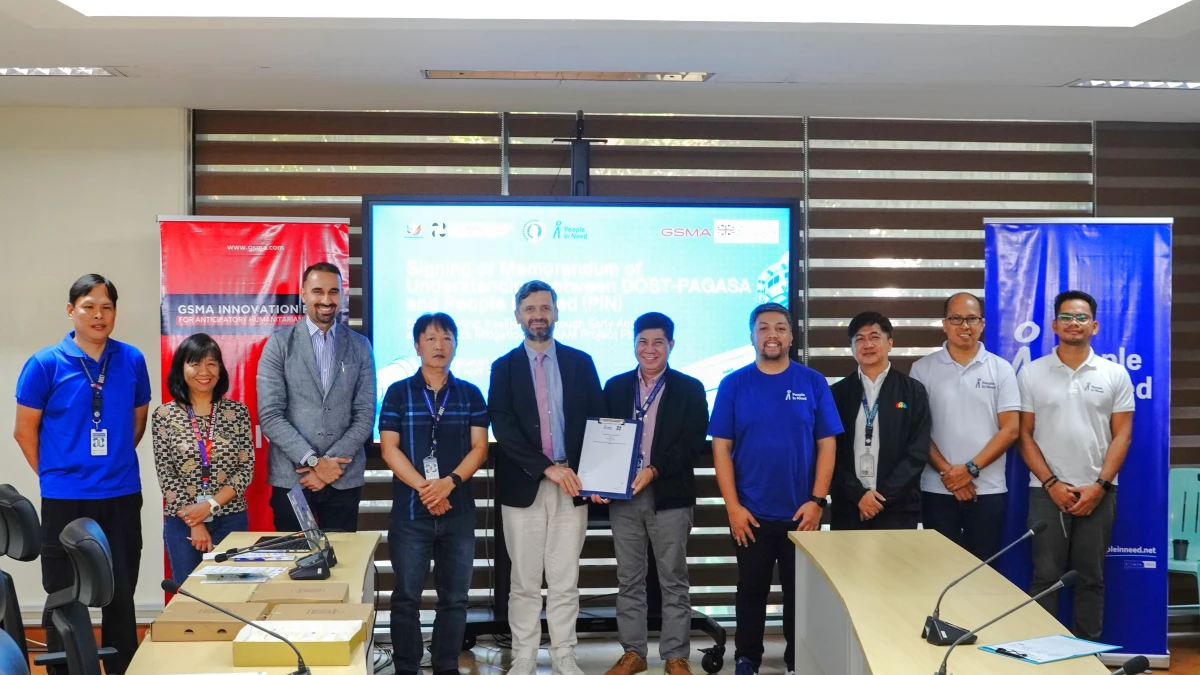
People in Need and DOST-PAGASA have officially signed a Memorandum of Agreement (MOA) to implement Phase 2 of the STREAM–EWS (Strengthening Resilience through Early Action and Impact Mitigation – Early Warning System) project, expanding a proven early warning model to additional high-risk areas nationwide.
The project is backed by GBP 125,000 (over PHP 10 million) and is funded through the GSMA Innovation Fund via its Innovation Fund for Anticipatory Humanitarian Action, with support from the UK Foreign, Commonwealth and Development Office. The MOA signing was witnessed by GSMA representatives, underscoring the growing role of innovation financing and mobile technology in strengthening climate resilience in disaster-prone countries like the Philippines.
"Scaling this technology isn't just about sensors and data; it’s about buying precious time for families at risk. By localized forecasting and strengthening our partnership with DOST-PAGASA, we are ensuring that even the most remote communities have the actionable information they need to act before the water rises." – Pascal Arthaud, Country Director People in Need Philippines

This also deepens collaboration with telecommunications partners, including Smart Communications and PLDT, with continued expansion toward broader engagement with Globe Telecom to ensure timely warnings reach even the most remote communities.
Expanding protection to eight additional flood-prone municipalities across Philippines
STREAM–EWS, which was initially piloted in 12 remote, flood-prone municipalities in Mindanao, will now expand its coverage to eight additional municipalities across Luzon, Visayas, and Mindanao:
• Region II (Cagayan): Abulog, Baggao
• Region V (Camarines Norte): Labo, San Vicente
• Region VIII (Eastern Samar): Jipapad, Oras
• Region X (Bukidnon): San Fernando, Valencia City
These areas were selected based on flood history, population exposure, poverty incidence, gaps in early warning infrastructure, and the strong commitment of local government units.

The Philippines is very fortunate to have so many river systems that often exceed carrying capacity and inundating the low-lying areas during inclement weather conditions. Putting a systematic observation station to monitor, support and enhance our flood forecasting and warning services is one of PAGASA’s priorities. The support of PIN thru the installation of rainfall and water level monitoring stations in highly vulnerable areas further strengthen the collective efforts of the national government and Non-Government Organization in ensuring the safety of our community from flooding and other water-related events. The STREAM-EWS Project is in accord with the initiative of the United Nations “Early Warnings For All (EW4All),” ensuring that every person on Earth is protected by a functional early warning system. — Eng’r. Roy A. Badilla, Deputy Administrator for Operations and Services, DOST-PAGASA
Making warnings usable at the community level
STREAM–EWS is designed to close the gap between scientific forecasting and community response by translating complex hazard data into clear, localized, and actionable alerts.
The system uses a combination of tools to make sure warnings reach people quickly and clearly:
• Sensors that track rainfall and rising flood levels in real time
• Mobile alerts and SMS messages to send warnings before critical levels arise
• Local forecasting tools to help local governments understand risks in their areas
• Digital systems that help disaster offices decide and act faster during emergencies
"With support from the GSMA Innovation Fund, People in Need is demonstrating how mobile and IoT‑enabled technologies can strengthen local early warning systems and help communities act sooner in the face of floods. By complementing PAGASA’s national forecasting capabilities with hyper‑local data and mobile alert dissemination, this project bridges critical gaps between forecasts and early action at the community level. It is a strong example of how collaboration between humanitarian actors, government institutions and the mobile ecosystem can translate connectivity into real‑world resilience and lifesaving impact." Kimberly Brown -Head of Mobile for Humanitarian Innovation, GSMA
Strengthening anticipatory action and long-term sustainability

STREAM–EWS Phase 2 shifts early warning from reactive alerts to anticipatory action, strengthening the capacity of disaster management authorities and at-risk communities to predict, prepare for, and respond to flooding using localized data and inclusive communication systems.
This brings together national agencies, local governments, telecom providers, and development partners to ensure that early warning systems are
not only technically sound, but also sustainable, locally owned, and embedded in governance and decision-making.
Scaling technology for disaster resilience

The Philippines remains one of the most disaster-exposed countries globally, where early warning systems are among the most cost-effective tools for reducing loss of life and livelihoods.
STREAM–EWS Phase 2 underscores a critical reality: technology disaster preparedness already exists, but it must be more inclusive to reach those most at risk.

