
Waiting for Safe Ground: Supporting displaced families on Sarangani Island after the 7.8-magnitude earthquake
Share: Share an articleThe 7.8-magnitude earthquake that struck near Maasim, Sarangani Province, on 8 June 2026 devastated coastal and island communities across Southern Mindanao. Thousands of families were displaced as homes and critical infrastructure sustained extensive damage, estimated at ₱1.35 billion (€19.33 million).
On the remote islands of Sarangani Municipality and Davao Occidental, damaged access routes and existing geographic barriers made it even more difficult for communities to receive assistance and begin recovery.
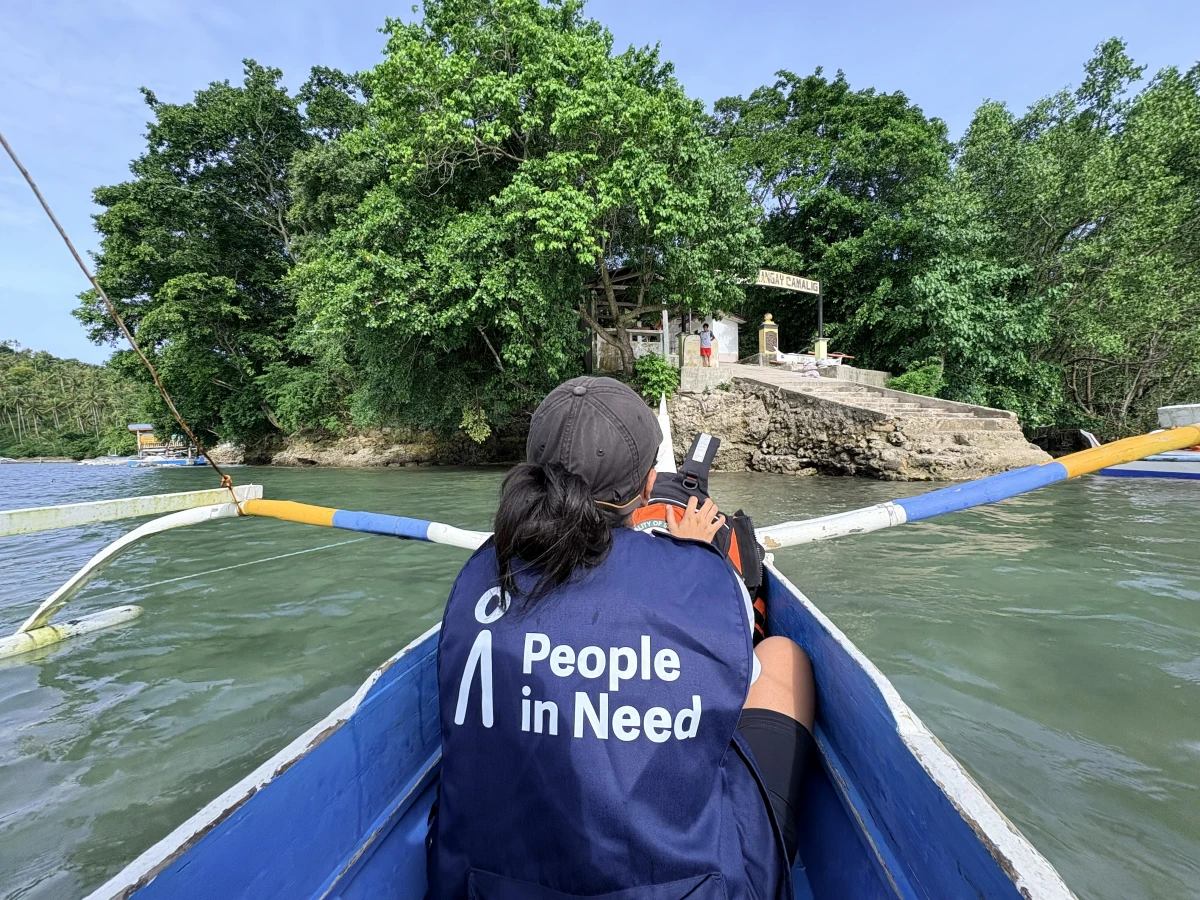
Many families remained displaced and unable to return home. Among them is 47-year-old Julito Cawa from Barangay Camalig, one of the areas declared unsafe on Sarangani Island due to landslide risks and ground instability.
Homes were damaged or destroyed, forcing residents to evacuate. For Julito and his neighbours, uncertainty has become part of daily life.

Life in a temporary shelter
Families from Barangay Camalig were relocated to the local elementary school, now serving as an evacuation centre.
While it provides safety, conditions remained difficult. Families share crowded spaces with little privacy. Rainwater often seeps into sleeping areas, while mosquitoes make it difficult to rest, particularly for children and older persons.
Responding to immediate needs
People in Need Philippines, together with Balay Mindanaw Foundation Inc. and Maranao People Development Center Inc., launched emergency response activities through the Relief for Earthquake-Affected Communities in Mindanao (REACH-M) project. Supported by a €100,000 (approximately PHP 6.9 million) donation from the People in Need Club of Friends, we delivered immediate assistance to affected communities across Southern Mindanao.
Our rapid assessments identified urgent shelter needs among displaced families on Sarangani Island. To help address these needs, we distributed 312 mosquito nets to 222 families, and we provided 62 families with plastic sheeting or tarpaulins to improve conditions in evacuation centres and temporary shelters.

Our assistance helped families create safer, drier sleeping spaces and provided protection from mosquitoes while they remained displaced.
For Czarina Jezza Damo, our Education in Emergencies Project Manager and Emergency Responder, the response highlighted the importance of listening to affected communities.
Waiting to rebuild

While immediate needs have been addressed, many families remain uncertain about what comes next. Residents whose homes are in high-risk areas await information on permanent relocation sites.
For communities on Sarangani Island, recovery extends beyond rebuilding damaged houses. It means securing a safe place to live, restoring livelihoods, and rebuilding a sense of stability.
"We just want to go back to normal. We want a place where we can feel safe and start over."


